
Tracing Davis County Former Owners
Work from the parcel outward. The newest deed gives you a grantee and a legal description. That same person should then appear as a grantor on the prior deed, and so on back through time. When an estate, trust, replat, parcel split, or entity name change interrupts the trail, branch out and check both paths. Trust the legal description over any street label. Names and addresses change; the land does not.
| Source | Years It Covers | Where Held | What It Shows |
|---|---|---|---|
| Recorder land records | Mission since 1850; historical collection highlighted from 1870 | Davis County Recorder | Deeds, parties, dates, and legal descriptions |
| Books and microfilm | Computerization and microfilming began in 1981; exact online cutoff not stated | Recorder counter and terminals | Earlier indexes and instrument images |
| Recorded subdivision plats | Search by the named subdivision; no single countywide cutoff stated | Recorder and REDI-Web | Lot, block, dedication, and amendments |
| County and state archives | Catalog metadata and series dates vary | Clerk Records Office and Utah Archives | Finding aids, record series, and historical context |
The Recorder is the starting point whether your parcel is new or historic. If the online index shows no image, visit a public terminal. Ask staff there about older books or microfilm. The County Records Catalog helps you spot the right administrative series. A GRAMA request reaches county-held material that never made it online. Utah State Archives indexes and local directories can fill in names and dates. Still, nothing substitutes for the deed itself.
Davis County Deed Books and Microfilm
Treat the Recorder's 1981 computerization and microfilming effort as an access clue. Do not treat it as a digital boundary. A deed from the 1800s may still live in a bound book or on microfilm. Its entry may appear in the land-record index anyway. Public terminals sit at the Recorder's Farmington counter. Staff there can discuss older book access and copy options. They will hand over records. They will not run a title search or trace owners by phone. Copies cost $2 per page, and a certified copy runs $5 plus the per-page charge. A plat carries its own price. A screen entry may have no image. In that case, jot down the instrument details first. The counter can then pull the right volume. For equipment and local-history help, see Davis County Library locations and local-history services at the Farmington headquarters.
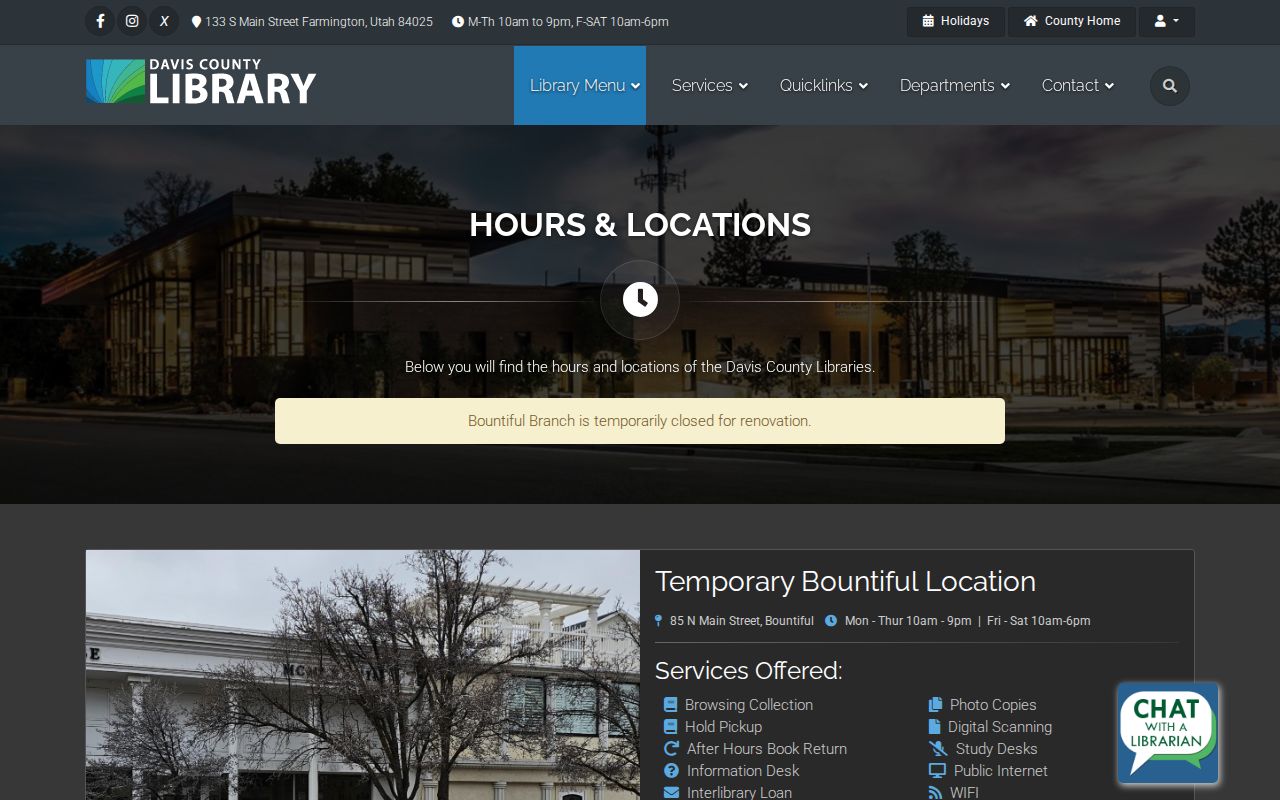
Once the Recorder index points you toward an older era, microfilm and local-history collections add useful context around the bare deed entries.
Davis County Plat and Lot History
A deed chain gets tangled when a farm tract becomes a subdivision. It also tangles when a single lot is split. Search the Recorder's alphabetical subdivision index by plat name. Note the lot, block, dedication date, and any amendments. In REDI-Web, a paper icon beside an abstract opens the dedication plat. Compare that plat with the current parcel polygon. The legal description still governs the land record. Before matching an old deed to a modern address, check for vacations and boundary adjustments. Check for annexations and re-subdivisions too. A street label can change. The same lot stays traceable through plat and legal description. The county publishes no countywide street-renumbering crosswalk.
Walking the Davis County Deed Chain
Read the chain as linked conveyances. For each instrument, record the grantor, the grantee, and the recording date. Also note the document entry number and the legal description. Search each earlier grantee as the next seller. Confirm the parcel description still fits at every step. An owner-name hit means nothing until its land description matches your parcel.
- Locate the newest deed and save its date, parties, and complete description.
- Search the grantee as a grantor to find the later transfer of the same land.
- Open the earlier deed and follow its grantee to the next instrument back.
- Pause for a split, probate, quitclaim, entity rename, or older book reference.
- Grantor
- The party shown as conveying an interest.
- Grantee
- The party shown as receiving an interest.
- Chain of title
- The ordered instruments linking earlier and later interests in the parcel.
- Legal description
- The formal land text used to compare deeds across changing addresses.
Davis County Archives and Directories
The Clerk's Records Catalog is built on ArchivesSpace. It describes county series with their dates, formats, and custodian agencies. It holds metadata, not digital copies. Use it to identify a record. Then request the copy under GRAMA from the office that keeps it. Utah State Archives adds name indexes, agency inventories, and digital collections. Its series lists cover Davis County offices and probate records. Browse the Utah State Archives digital collections for historical indexes and series. Directories tie a person to a street or business at a point in time. Research aids point to an 1879/80 Utah directory. They also cite a Bountiful and Davis County Polk directory and a Kaysville directory. These are residence clues, never proof of title.
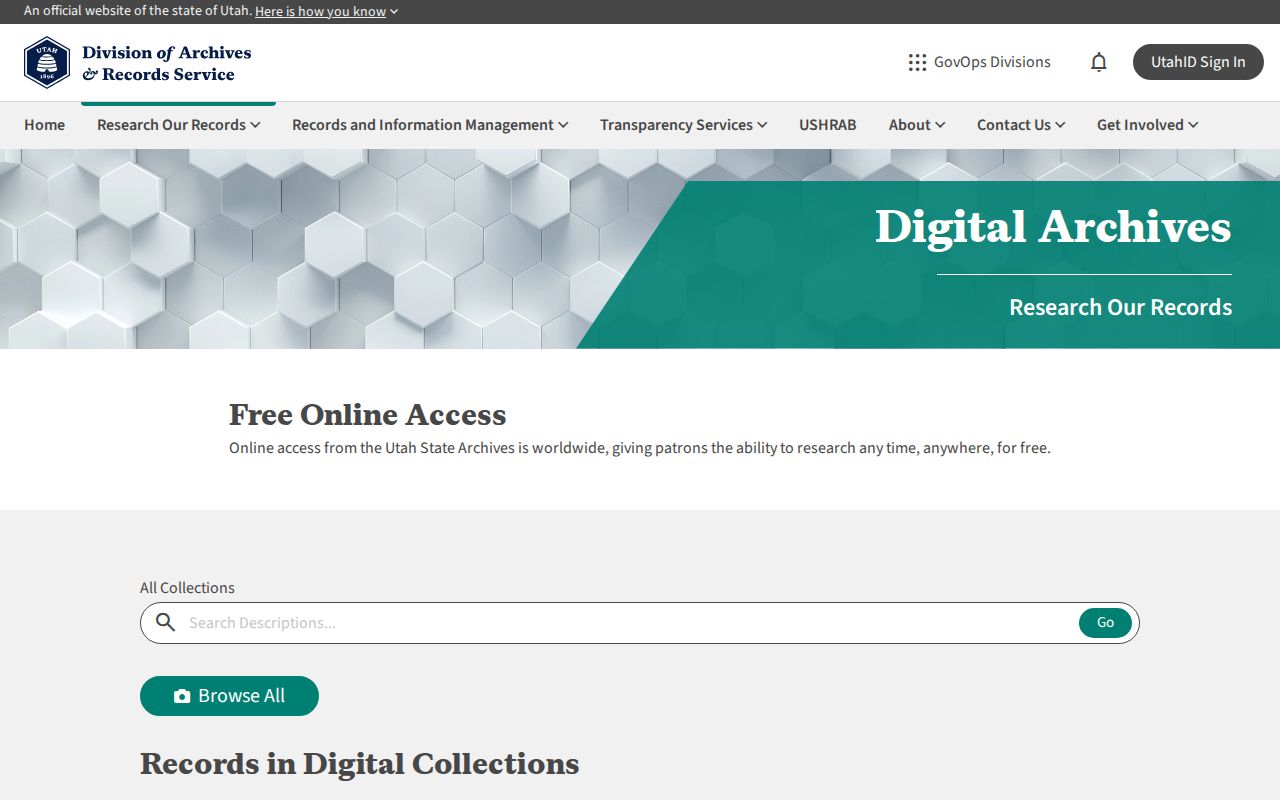
Archives finding aids show the source and format of a record before any copy request goes out.
Davis County Probate Transfers
An estate can snap the simple grantor-grantee chain. Utah Courts Xchange may show the petition, the appointment of a personal representative, an inventory, a sale authorization, a distribution, or the final decree. The Recorder holds the deed that actually moves the land, whether a personal-representative deed, a beneficiary deed, or another instrument. Search the estate in the court docket first. Then verify the transfer in the Recorder by party and parcel description. A complaint or probate petition is not a conveyance. Find the final order, then the recorded document behind it. Older probate material appears in Utah Archives or the county catalog; the county publishes no dedicated Davis County probate index online, so the catalog is the place to look.
Davis County Death and Title Records
A death certificate settles two things: who died and when. It cannot move real estate. Utah keeps death records from 1905 onward. Most Davis County families can find the certificate they need. Getting a certified copy of a recent one takes a direct, tangible, and legitimate interest. That usually means immediate family, a guardian, or a legal representative.
Time loosens those limits. Death records open to the public after 50 years. Other vital records open after 75, and births after 100. The Utah Archives guide sorts research into pre-1898, 1898 to 1905, 1905 to 1976, and 1977 to the present. Match your date range before you search. Whatever the era, treat the certificate as one thread in a Davis County property records search. Pair it with probate filings and the Recorder's deed records, never as a stand-in for either. See Utah Archives' death-record guide for the full chronology.
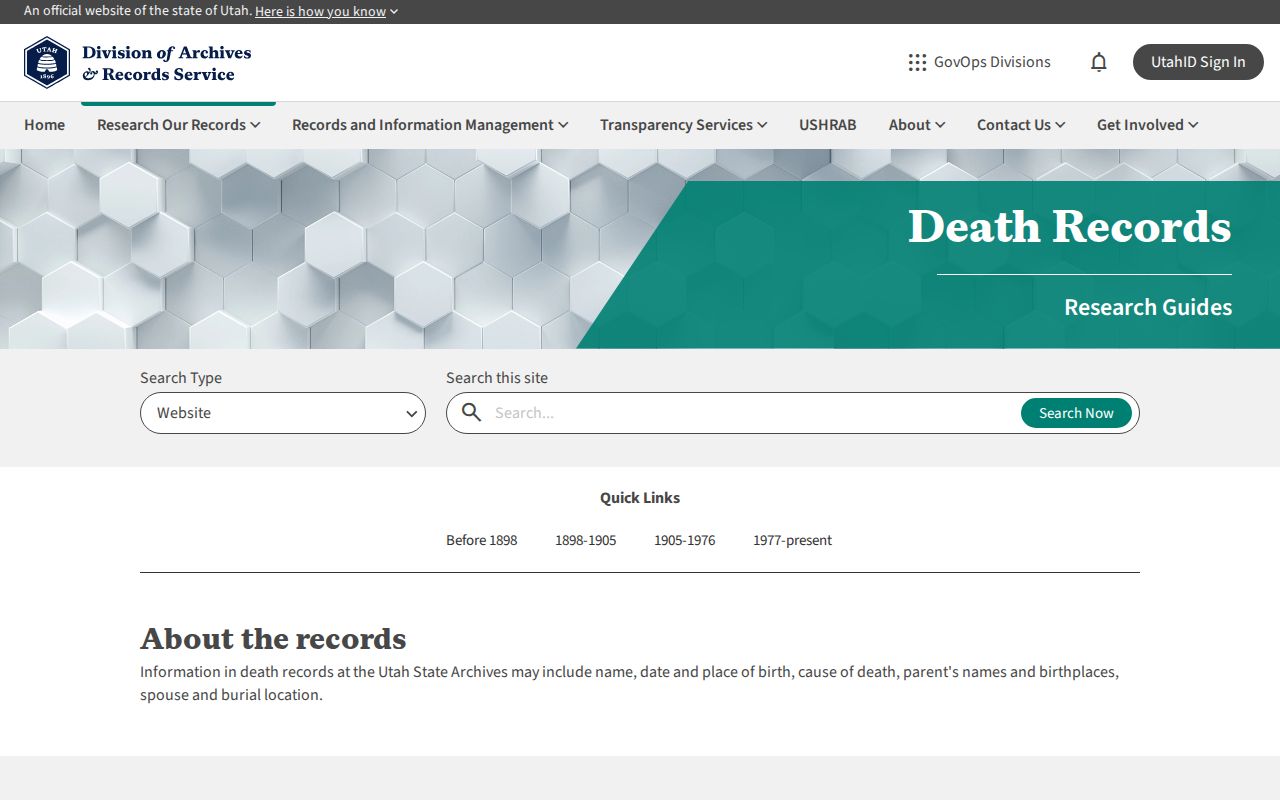
Match the access period to the record's date first. Then tie that identity evidence to a recorded transfer in the deed records. The Utah Office of Vital Records death-record page spells out who may order a recent certificate.
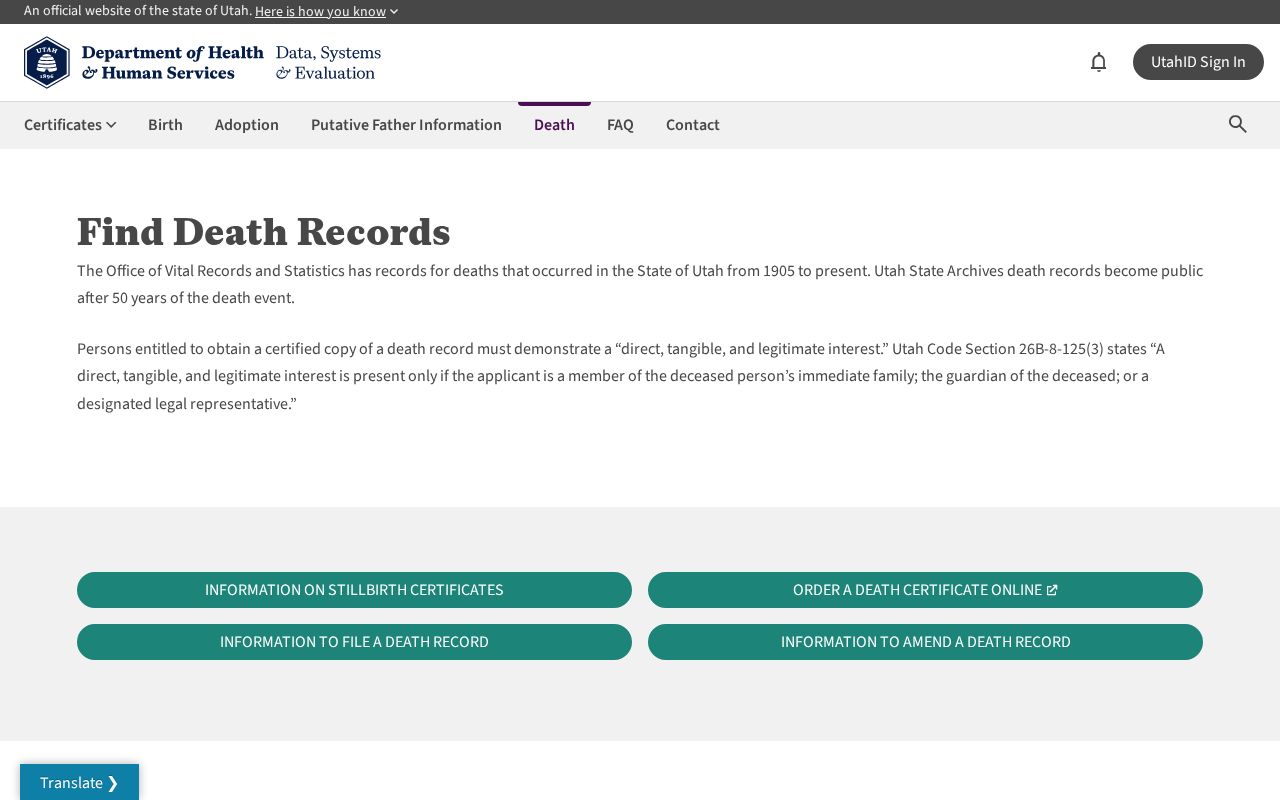
Recent records follow today's eligibility rules. Records past the waiting period move to the Archives timeline instead.
How Far Davis County Records Reach
The Davis County Recorder traces safeguarded land records back to 1850. It also points to a historical collection from 1870. Computerization and microfilming arrived in 1981. The office publishes no start year for its online deed index. So a searchable name in the parcel records is no promise that the full deed image sits online. Early county holdings also may not have survived in the same format. That caution is worth holding onto when you trace an old owner of record.
Lawful use. Use Davis County former-owner research for title work, house history, and property diligence. Do not use an old deed or directory to track, threaten, or harass a living person.
Older Davis County Owner Records
The Recorder's land records reach back to 1850. Its highlighted historic collection begins in 1870, and computerization and microfilm work started in 1981. Those milestones do not mark a hard cutoff for today's online index, though. A name that returns no match may simply have been indexed in another form. It may be tied to a different description of the parcel. Or it may sit in an older source that lives in a book, on film, or inside an archival finding aid.
Work backward by legal description, not just by party name. A tract can shrink from raw acreage into a subdivision. It may pick up a new lot number, street name, or parcel serial along the way. Older deeds may carry a former community name. They may also use metes-and-bounds calls that today's map no longer shows. Read together, the grantor and grantee names, recording dates, instrument references, and subdivision plat build a far stronger chain. A name-only list never could.
ArchivesSpace can help you identify which county record series exist. The Davis County Library and the Utah State Archives hold separate historical materials. Remember that a catalog entry is not the document itself. A death-record guide or a newspaper archive supplies context, not proof, of a property transfer. For a thorny older title question in Davis County, request the underlying Recorder record. Then let a title professional examine the complete chain.